ArsAntiguaPresents.com: November 2008 edition

Buxtehude.png

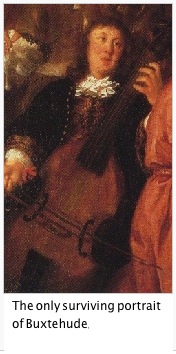
Our program (10 minutes and 4 seconds) features “Singet Dem Herrn”, for soprano with violin obbligato by Dietrich Buxtehude (c. 1637-1707). The organist viagra generic Dietrich Buxtehude is widely considered the most important German composer of the mid Baroque period and “Singet Dem Herrn” is one of his most beautiful works. His style strongly influenced many composers, including Johann Sebastian Bach.

The motet “Singet Dem Herrn” by Dietrich Buxtehude with soprano soloist Tamara Miller-Campbell; William Bauer, violin; and Neal Richardson, harpsichord.
ArsAntiguaPresents.com: October 2008 edition

Johann Schein.png

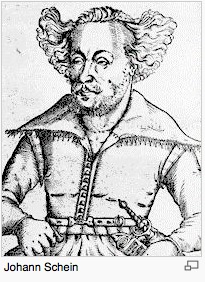
Our program (10 minutes and 23 seconds) features the modern premiere of the “Intrada” and “Trezza” by Johann Heinrich von Schmelzer (1623-1680) as well as the”Turkische Intrada” by William Brade (1516-1630), the “Intrada” from “Banchetto Musicali” by Johann Hermann Schein (1516-1630) and the In Nomine “CRYE” (cry) by Christopher Tye (1505-1573).

Johann Heinrich von Schmelzer was the Kapellmeister to Leopold I and a renowned violinist across Europe. Schmelzer is often regarded as the first composer to integrate the tunes of the Viennese street musicians into sophisticated instrumental court music. His “Intrada” and “Trezza” performed here were recently found among a set of Austrian pieces deposited at the Uppsala University in Sweden.

This vast collection contains over 2,000 musical works in manuscript from the seventeenth and early eighteenth centuries and was donated to the Uppsala University Library in 1732 by Anders von Duben. This broadcast is the modern clomid premiere of this work.

ArsAntiguaPresents.com: September 2008 edition

Viola D Amore.png

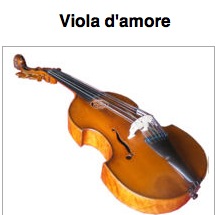
Our program “The Virtuous viola d’amore” (12 minutes and 19 seconds) features the Overture in 8 movements for two violas d’amore and harpsichord by Johann Caspar Ganspeck (1637-1741). The viola d’amore shares many features of the viol family – a flat back and intricately carved head at the top of the peg box but, unlike the viols, it is unfretted and played much like a violin, being held horizontally under the chin. It has seven bowed strings and seven resonator strings (which are not played directly but vibrate in sympathy with the notes played). Thanks largely to this sympathetic strings, the viola d’amore ahas a particulary seet and warm sound. Mozart’s father said the instrument sounded “especially charming in the stillness of the evening”.

This performance by Ars Antigua, directed by Jerry Fuller features violists d’amore William Bauer and Rachel Gries.

The Overture for 2 violas d’amore and harpsichord by Johann Caspar Ganspeck in 8 movements:

  • Overture
  • Presto
  • Passepied
  • Bouree
  • Menuet
  • Gavott
  • Hornpipe
  • Chaconne

ArsAntiguaPresents.com: August 2008 edition

Our program (11 minutes and 21 examples of evaluation essays seconds) features a program of “Bawdy Songs and Fythel Tunes” including “Hit her on the Bum” by Robert Bremner (1713-1789) and “Watkins Ale”, an anonymous work from an English Broadside.

Robert Bremner was a Scottish violinist and composer who wrote sonatas and variations based on popular tunes of this day. Watkin’s Ale comes from an old English broadside, which was sort of a newspaper in its day. It is a cautionary tale for young women with a moral at the end.

This performance by Ars Antigua directed by Jerry Fuller, features Nancy Bristol, soprano.

ArsAntiguaPresents.com: July 2008 edition

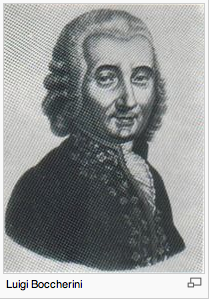
Luigi BocceriniOur program (12 minutes and 22 seconds) features Luigi Boccherini’s “La Tirana Spagnola”.  Boccherini (1743-1805) was an early classical era composer and cellist from Italy, whose music retained a courtly galante style while he matured somewhat apart from the major European musical centers. As a young man, Boccherini was recruited to a post in Madrid where he had great success and spent almost the entirety of his career. This work carries the subtitle, “La Tirana Spagnola” because of the recurring motive at the beginning which imitates a small tambourine evoking the “Tirana” – a Spanish dance performed with a tambourine.
This performance by Ars Antigua features members of the Mirabel period instrument string quartet with Jerry Fuller, double bass.

ArsAntiguaPresents.com: March 2008 edition

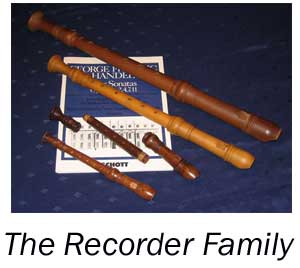
Our program this month (13 minutes and 29 seconds) features Amy Pikler, winner of the 2008 Ars AntiguaMidwest Young Artists National Early Music competition, generously sponsored by Walgreens. Fifteen year old Amy Pikler began her musical studies at the age of five and currently studies violin with Desiree Ruhstrat and recorder with Patrick O’Malley. Amy has appeared as soloist with the Sewanee Summer Music Festival Orchestra, the Chicago Chamber Orchestra and the North Suburban Symphony. In 2006 Amy won the junior division of the Ars AntiguaMidwest Young Artists Early Music competition, in addition to winning the senior division this year. Amy also plays violin and is a member of the symphony orchestra and chamber music program at Midwest Young Artists.
This month’s program includes three short pieces:

Concerto in F Major movement three by Giuseppe Sammartini (1695 – 1750)

Siciliana from Sonata in E-flat Major by Johan Sebastian Bach (1685-1750)

Concerto for Sopranino Recorder movement one by Antonio Vivaldi (1678-1741)
Midwest Young Artists, located in Highwood, Illinois , is the largest and most comprehensive youth ensemble music program in the Midwest . Founded in 1993 with one orchestra, MYA has grown to include 5 youth orchestras, more than 60 chamber music ensembles, 3 choral groups, an all-inclusive jazz program, and classes in music theory and history.

ArsAntiguaPresents.com: February 2008 edition

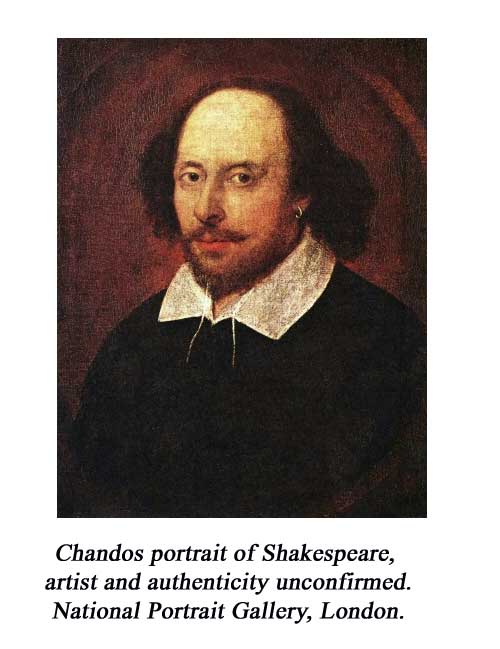
Our program the Music of Shakespeare‘s Time (7 minutes and 50 seconds), includes four short pieces:

An anonymous work La Bergamasca,

L’Innamorato by Giovanni Gastoldi (1550-1622),

Intrada from Banchetto Muicali by Johann Hermann Schein (1586-1630), and

La Volta by Michael Praetorius (1571-1621).

This performance by Ars Antigua directed by Jerry Fuller was recorded live at the 2007 St Louis Early Music Festival.

Ars Antigua, directed by Jerry Fuller, formed a 5 part renaissance string band for this performance of Elizabethan and Jacobean music, and includes one violin, two alto violas, a tenor viola and continuo. La Volta , which ends the set was a known favorite of , who loved to dance to it.